
What to Expect from a Professional Chauffeur on Your Journey

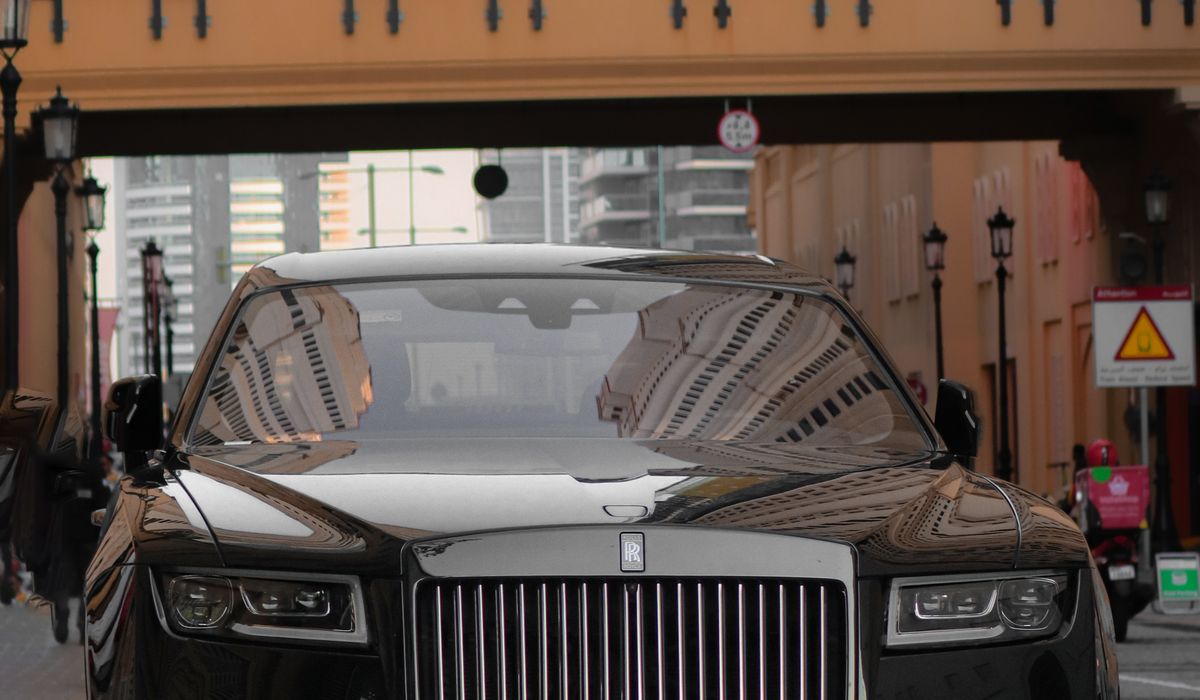
The Greeting: Calm, Discreet and On Time
A professional chauffeur's work begins long before you reach the kerbside. On the day of travel, expect a confirmation message with your driver's name, vehicle details and a contact number. If your flight or train is delayed, the chauffeur monitors it and adjusts the pickup time without you needing to chase anyone.
At the meeting point, the greeting is understated. In arrivals halls, your chauffeur waits with a discreet name board, positioned where you can see it but not where it draws attention. For office pickups, you'll often receive a quiet text to say the car is waiting. There is no honking, no phone call in the middle of a meeting, and no hovering. The aim is to make your arrival feel entirely unremarkable — in the best possible way.
Inside the Vehicle: Comfort as Standard
Executive vehicles are prepared rather than merely cleaned. Expect the cabin to be at a comfortable temperature before you step in, particularly on a January morning in Manchester or a July afternoon in London. Still and sparkling water, mints and tissues are typically provided, along with phone chargers for both iOS and Android devices.
Other details worth knowing:
- Climate control — set to your preference, adjusted on request rather than assumed.
- Wi-Fi and power — many executive cars offer onboard connectivity and charging points at the rear seats.
- Reading materials — newspapers or magazines, often including the day's business pages.
- Privacy — tinted windows or sun blinds for those who prefer to work unseen.
- Quiet — conversation is offered, never imposed. A simple "I'll be working" is all that's needed.
If you have a preference — no music, a particular radio station, a cooler cabin — say so when booking or as you get in. Good chauffeurs record these details for future journeys.
Route Planning and Realistic Timing
The most valuable thing a chauffeur provides is not the car but the judgement. Before your journey, a professional checks live traffic, planned roadworks and major events that could affect the route. In the UK, that means understanding how a closure on the M25 or a match at Wembley can ripple across an entire city, and how school term dates change the morning rush.
Expect to be asked about your arrival time rather than your departure time. Chauffeurs work backwards from when you need to be somewhere, then build in a buffer. For a central London airport run, that might mean leaving twenty minutes earlier than you think is necessary. If the traffic clears, you arrive early and can wait in comfort. If it doesn't, you're still on time.
You'll also find that alternative routes are already mapped in the driver's head. When the satnav suggests a bottleneck, an experienced chauffeur often knows a parallel road that saves ten minutes. They won't gamble with your schedule.
Luggage and Door-to-Door Assistance
Luggage handling is part of the service, not an optional extra. Your chauffeur will meet you at the vehicle, take your cases and load them securely — never in the passenger footwell, never balanced on a seat. Suit carriers and golf bags are usually accommodated without fuss, provided they're mentioned at the booking stage.
At your destination, the same applies in reverse. Bags are unloaded and placed on the pavement or handed to a porter. If you're heading into a hotel or office with step-free access, the chauffeur will often walk ahead to hold the door. For passengers with mobility needs this matters even more, and reputable operators will discuss access requirements in advance.
Discretion and Professional Boundaries
Confidentiality is fundamental to executive travel. What's said in the back of the car stays there. Chauffeurs who work with corporate clients understand that a phone call about a merger, a difficult conversation with a colleague or a personal matter is not for repetition.
This discretion shows itself in small ways:
- No eavesdropping — the driver keeps to their own lane, literally and conversationally.
- No unsolicited opinions — on politics, business or anything else.
- Careful documentation — journey records, invoices and expense reports handled with the same confidentiality as the trip itself.
- Respectful distance — waiting nearby but not within earshot when you're on a call.
Many operators sign non-disclosure agreements with corporate accounts, and individual chauffeurs are briefed on client sensitivities. If you need to discuss something confidential on the move, you can do so knowing it will not travel further.
Using the Journey Well
Perhaps the greatest benefit of professional chauffeur travel is the return of your time. A forty-minute journey between meetings becomes forty minutes of preparation, or a chance to answer emails, or simply a quiet pause between appointments. Some passengers sleep. Others rehearse a presentation. A few just watch the city go by.
You'll notice the difference most on tightly scheduled days. Because you're not driving, parking or finding your way, you arrive fresher and more focused than you would otherwise. That is the quiet purpose of a good chauffeur: to remove the friction from your day so that the important parts get your full attention.

Joeby Ragpa
This template is so awesome. I didn’t expect so many features inside. E-commerce pages are very useful, you can launch your online store in few seconds. I will rate 5 stars.
ReplyAlexander Samokhin
This template is so awesome. I didn’t expect so many features inside. E-commerce pages are very useful, you can launch your online store in few seconds. I will rate 5 stars.
ReplyChris Root
This template is so awesome. I didn’t expect so many features inside. E-commerce pages are very useful, you can launch your online store in few seconds. I will rate 5 stars.
Reply